Henan Aifite Intelligent Equipment Co., LTD.


Products

"Steel Heavy Anchor" for Heavy-Load Lifting - Chain Hook for Large Engineering Components
Classification:
Product Introduction
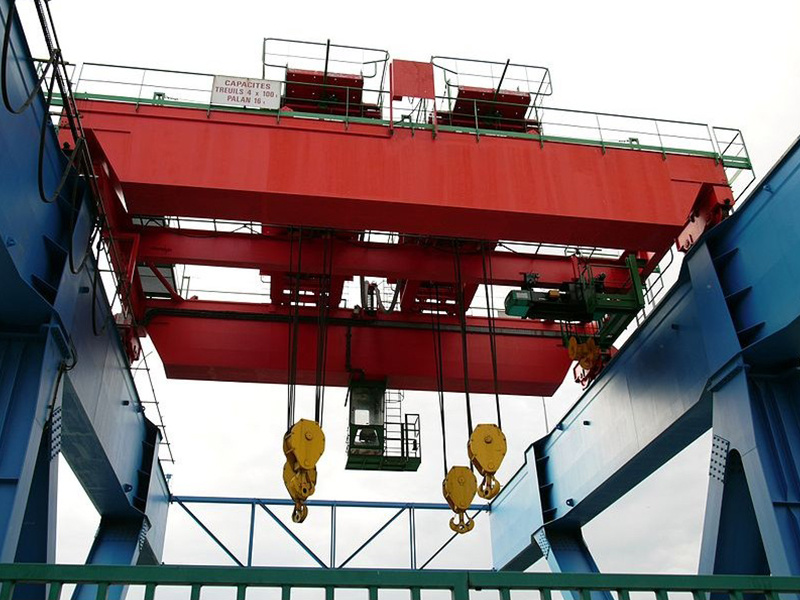
At the lifting sites of giant objects weighing over a thousand tons, such as nuclear power domes, wind turbine towers, and bridge segments, the "inability to cope" and "safety hazards" of traditional hoists have been "roadblocks" to project progress: insufficient load-bearing capacity leads to deformation, unstable hanging causes slippage, and complex environments accelerate wear... The chain hooks for large engineering components are designed to be "unbreakable under heavy loads, safe, and suitable for all scenarios", laying a solid foundation for the "along-the-air relay" of super projects.

1. 10,000-ton Load Capacity: From "Bearing" to "Stability"
✅ Material Rolling:
The main hook is forged from ultra-high-strength quenched and tempered steel (such as S690QL). Strengthened through multiple rolling passes and ultrasonic quenching, it boasts a tensile strength exceeding 1200 MPa and a surface hardness of HRC58+. It easily supports loads ranging from 100 to 5,000 tons (customizable). Even when lifting eccentric loads, the stress distribution design prevents localized fracture.
✅ Structural Excellence:
Multi-chain Load Sharing System: Symmetrically arranged Grade 80 lifting chains (breaking force ≥ 4 times the rated load) evenly distribute the weight of heavy objects, eliminating single-point stress fracture.
Adaptive Hook: The curved interlocking design automatically conforms to the contours of the component (such as the rounded surface of a nuclear power dome or the angular edges of a bridge steel box girder), ensuring a consistently level lifting posture with an error of ≤±5mm. II. Safety Redundancy: Double Protection for Aerial Operations
🔒 Active Protection: Anti-slip and Anti-overload:
The hook features a built-in mechanical latch that automatically locks after hooking, ensuring a secure engagement even under vibration and impact.
Equipped with an intelligent load monitoring system, it triggers an audible and visual alarm when the load exceeds 10% of the rated value, and a forced power outage when it exceeds 15%, eliminating danger at the source.
🔒 Passive Protection: Redundancy and Damage Resistance:
The dual-hook backup design (a secondary hook temporarily bears the load if the primary hook fails) provides optimal emergency response time.
The chain's surface is zinc-plated and Teflon-coated for salt spray and UV resistance, extending its lifespan threefold in the highly corrosive environments of nuclear power plants and the high-altitude wind power plants. III. Versatile Applications: From Nuclear Power to Infrastructure, Adaptable to All Fields
🌐 Exclusive for Megaprojects:
Nuclear Power: Precision lifting of nuclear island domes and steam generators (hundreds of tons, millimeter-level alignment);
Wind Power: Adaptable to tower segments and nacelles (high-altitude lifting with wind resistance and stability, swing amplitude ≤ 10 cm);
Bridges: Lifting of steel box girders and cable tower segments (maintaining balance under large spans and eccentric loads);
Heavy Industry: Transferring metallurgical furnaces and heavy machinery bodies (lifting extra-wide and extra-long components in one go).
🌐 Customization Breakthrough:
Supports customizable hooks, variable chain lengths, and angle adjustment, adapting to specialized lifting conditions such as oblique-lift, tilting, and clustered lifting (e.g., 90° tilting of wind turbine towers for erection). It can even integrate a laser alignment system to work with cranes for unmanned precision lifting.
Keyword:
Feedback
Leave a message online and get the product quotation free of charge. We will arrange the specialist to contact you as soon as possible.



It founded in the 2000s, It has a history of about 20 years. We own a professional produce team,sales team and a after-sale service team, which can make sure satisfy your whole purchase procedure.
Contact Us
Whatsapp:8613507096268
E-mail:sales@aifitemhe.com
Weizhuang, Changyuan,Xinxiang city, Henan province, China