Henan Aifite Intelligent Equipment Co., LTD.


Products

Rail Clamp: a "safety anchor" on the rails, giving cranes windproof armor
Classification:
Product Introduction
The wind suddenly picked up in the port yard.
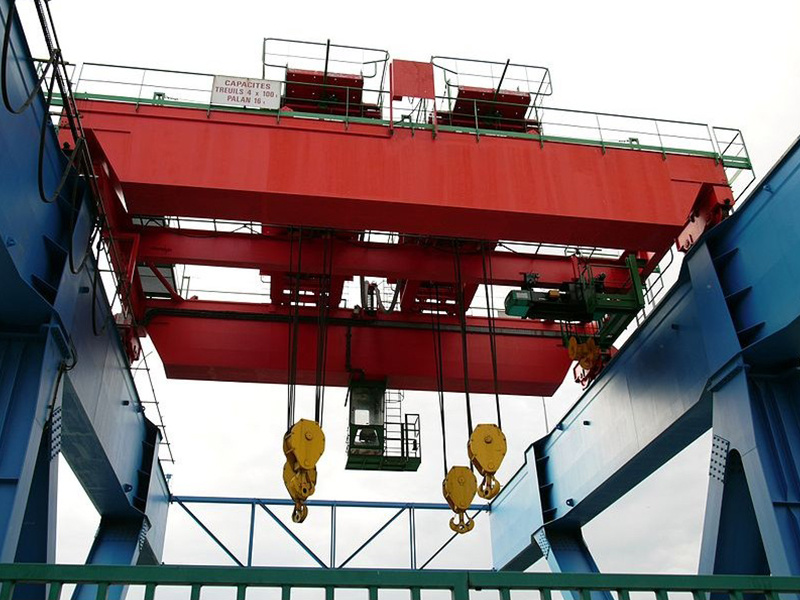
Under the hundred-meter-tall gantry crane, containers were stacked like building blocks. A force 7 gust of wind whipped up dust and sand. But this multi-hundred-ton steel behemoth remained motionless—the red and yellow rail clamps, like giant steel jaws, gripped the rails with a firm grip, and the chains, like a fully drawn bowstring, pinned the equipment to the track.
This striking "industrial" color scheme is the most inconspicuous yet crucial component of the crane's safety system: when the equipment stops operating, encounters extreme weather, or suffers a sudden power outage, it serves as the last line of defense against the risk of slipping or capsizing.

A small device with a big mission: Instantly switching from "sliding" to "anchoring."
A rail clamp is essentially a converter between dynamic and static.
For port gantry cranes, it acts as a "windproof armor": it automatically clamps in winds of force 6 (wind speed ≥ 13.9 m/s) and maintains zero displacement in winds of force 12 (wind speed ≥ 32.7 m/s). Measurements at a coastal port show that cranes equipped with rail clamps experienced a 90% reduction in equipment damage during typhoons.
For overhead cranes in workshops, it acts as a "positioning guardian": combined with laser ranging (accuracy of ±1 mm), it ensures a crane's parking error of ≤ 20 mm. Case studies in automobile assembly plants have demonstrated that rail clamps improve lifting accuracy by 30%, reducing body weld gaps to 0.5 mm.
For emergency situations, it acts as a "lifeguard": in the event of a power outage, spring-driven clamping locks the track within 0.5 seconds, giving miners and maintenance personnel five minutes of golden escape time.
Scenario Challenge: From Construction Sites to Mines: A "Safety Answer Sheet"
1. Temporary Storage Yard: A "Windbreak" on Construction Sites
Challenge: Tower cranes (≤20 tons) encounter force 6 gusts during operation.
Solution: Manual rail clamps (pictured) + chain fastening, installed in 3 minutes, with a slip resistance of 5 tons and zero equipment movement.
2. Small Equipment: Anchors for Workshop Overhead Cranes
Challenge: A 10-ton overhead crane must be prevented from sliding after daily operations.
Solution: Red and yellow rail clamps (highly visible and easy to check), with hardened jaws, monthly maintenance cost less than 50 yuan, and a lifespan of 3 years.
3. Emergency Rescue: A "Lifeline" in Underground Mines
Challenge: Bridge cranes must be quickly locked during power outages.
Solution: Spring-actuated rail clamps (Ex d IIB T4 explosion-proof), clamping in 0.5 seconds, buying time for evacuation.
Keyword:
Feedback
Leave a message online and get the product quotation free of charge. We will arrange the specialist to contact you as soon as possible.



It founded in the 2000s, It has a history of about 20 years. We own a professional produce team,sales team and a after-sale service team, which can make sure satisfy your whole purchase procedure.
Contact Us
Whatsapp:8613507096268
E-mail:sales@aifitemhe.com
Weizhuang, Changyuan,Xinxiang city, Henan province, China