Henan Aifite Intelligent Equipment Co., LTD.


Products

Crane Buffers: The "safety anchor" of industrial giants, the protective philosophy of millimeter-level braking.
Classification:
Product Introduction
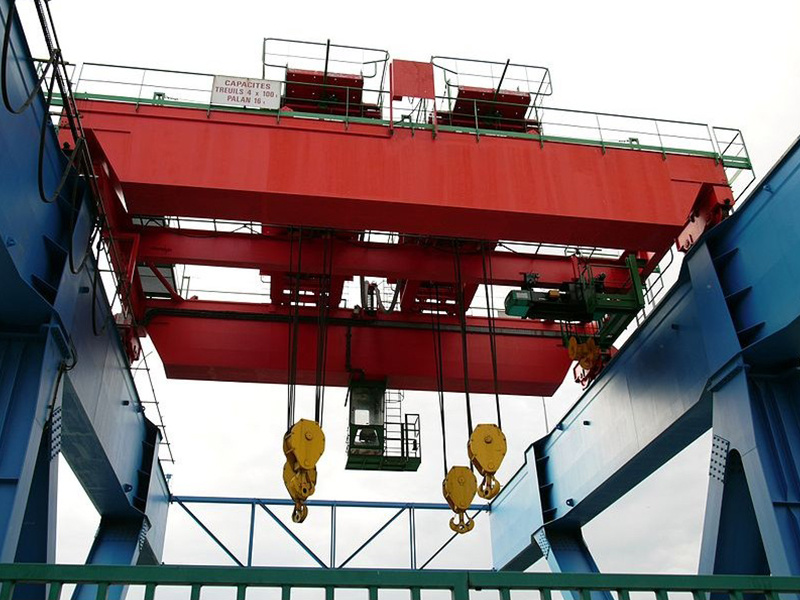
In the final assembly workshop of a heavy machinery plant, an overhead crane is lifting a ton-sized mold at a speed of 15 meters per minute. When it approaches the end of the track, the crane's buffer, like a "red armor," instantly activates. Hydraulic oil in the hydraulic cylinder flows through the orifice at a speed of milliseconds, dissipating the impact force of hundreds of tons and allowing the steel giant to dock with an accuracy of within 20 millimeters. This striking industrial red is the "last line of defense" for heavy equipment such as overhead cranes and overhead cranes, and an invisible guardian that "avoids danger" during countless lifting operations.

Decoding the Structure: The Art of Energy Dissipation in Millimeter-Level Gaps
Every design element of the shock absorber is a precise collaboration of mechanics and materials science:
Cylinder and piston rod: Forged from 45# steel, the piston rod is chrome-plated (0.05 mm thickness), achieving a surface hardness exceeding HRC 55. In the high salt spray environment of the port, the chrome plating reduces the corrosion rate from 0.1 mm/year to 0.01 mm/year, extending the life of the shock absorber at a certain ore terminal to 5 years.
Dust cover and return spring: The chloroprene rubber (CR) dust cover acts like a "telescopic bellows," encasing the piston rod to isolate iron filings and dust. The return spring, made of 60Si2MnA spring steel, has a spring force accuracy controlled to ±2%, ensuring the shock absorber resets within 0.5 seconds after each braking operation.
Damping adjustment system: A built-in precision throttle valve (0.5-2 mm aperture) achieves "flexible braking" by varying the oil flow rate. In the wind turbine blade hoisting scenario, the throttle valve reduces the peak fluctuation of the buffer force to less than 3%, preventing microcracks in the blades due to impact.
Scenario-Based Solutions: Red Armor's "Safety Answer"
From ports to mines, buffers have proven their value in extreme scenarios:
Port Logistics: In automated container terminals, buffers, combined with laser ranging (accuracy ±1mm), ensure that the positioning error of overhead crane trolleys is ≤20mm.
Heavy Manufacturing: During nuclear power dome installation, the buffer's "micro-buffering" technology (buffering force fluctuation <2%) ensures the docking accuracy of the 300-ton dome and the reactor pressure vessel is within ±0.5mm.
Mine Rescue: In underground waste rock piles, explosion-proof buffers (Ex d IIB T4) combined with the emergency braking system reduce the braking distance of overhead cranes from 2 meters to 0.5 meters in the event of a wire rope break, buying critical time for miners to escape.
Keyword:
Previous Page:
Next Page:
Feedback
Leave a message online and get the product quotation free of charge. We will arrange the specialist to contact you as soon as possible.



It founded in the 2000s, It has a history of about 20 years. We own a professional produce team,sales team and a after-sale service team, which can make sure satisfy your whole purchase procedure.
Contact Us
Whatsapp:8613507096268
E-mail:sales@aifitemhe.com
Weizhuang, Changyuan,Xinxiang city, Henan province, China