Henan Aifite Intelligent Equipment Co., LTD.


Products

Bridge Crane Buffer: The "flexible armor" of the steel giant, protecting every precise docking
Classification:
Product Introduction
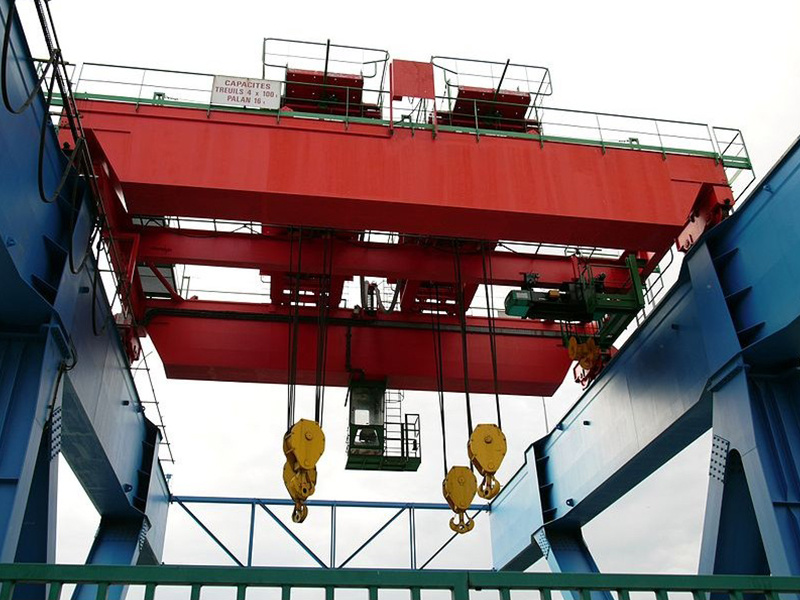
At a busy port container yard, the trolley mechanism of a bridge crane (BGG) moves horizontally at a speed of 20 meters per minute. As it approaches the end of the track, the BGG's buffer gently catches the operating mechanism like a "steel hand." This instantaneous "soft collision" is the last line of defense for the BGG's safety system. Responding in milliseconds, it absorbs hundreds of tons of impact force, allowing the hundreds-ton steel giant to dock as smoothly as a falling leaf returning to the earth. Even under extreme operating conditions, it serves as a critical barrier protecting lives and property.

An "Energy Muffler" in a Millimeter-Level Gap
The design of the buffer is a delicate balance of mechanics and materials science, with every detail imbued with "energy dissipation wisdom":
Hydraulic Cylinder: Forged from 42CrMo alloy steel, the inner wall is honed (roughness Ra ≤ 0.8μm) to ensure uniform hydraulic oil flow resistance. A buffer used at a port maintains a hydraulic oil viscosity variation of less than 5% in temperatures ranging from -20°C to +60°C, providing stable buffering even in extreme cold and heat.
Corrugated Dust Cover: A dust cover made of chloroprene rubber (CR) acts like a "retractable armor," enveloping the piston rod to isolate dust and iron filings. In the high-dust environment of an ore terminal, the dust cover reduces piston rod wear by 90%, extending the buffer's lifespan from one year to five years.
Return Spring: Made from 60Si2MnA spring steel, the return spring boasts a spring force accuracy of ±2%. A double-girder overhead crane at a shipyard boasts a spring return time of less than 0.5 seconds, ensuring rapid resumption of operation after emergency braking. Throttle valve assembly: A precision orifice (0.5-2mm diameter), like an "energy regulating valve," controls the buffering force by varying the oil flow rate. During wind turbine blade installation, the throttle valve assembly minimizes peak buffering force fluctuations to less than 3%, preventing "secondary oscillation" during blade installation.
Scenario Breakthrough: Buffers' "Safety Answer"
From ports to workshops, buffers have proven their value:
Port Logistics: In automated container terminals, buffers, combined with laser ranging (accuracy ±1mm), ensure that the positioning error of overhead crane trolleys is ≤20mm.
Heavy Manufacturing: During nuclear power dome installation, the buffers' "micro-buffering" technology (buffering force fluctuation <2%) ensures the docking accuracy of the 300-ton dome and the reactor pressure vessel is within ±0.5mm.
Mine Rescue: In underground waste rock piles, explosion-proof buffers (Ex d IIB T4) combined with the emergency braking system reduce the braking distance of overhead cranes from 2 meters to 0.5 meters in the event of a wire rope break, buying critical time for miners to escape.
Keyword:
Feedback
Leave a message online and get the product quotation free of charge. We will arrange the specialist to contact you as soon as possible.



It founded in the 2000s, It has a history of about 20 years. We own a professional produce team,sales team and a after-sale service team, which can make sure satisfy your whole purchase procedure.
Contact Us
Whatsapp:8613507096268
E-mail:sales@aifitemhe.com
Weizhuang, Changyuan,Xinxiang city, Henan province, China