Henan Aifite Intelligent Equipment Co., LTD.


Products

Crane gear couplings: a "power joint" for heavy-duty operations, industrial wisdom at the millimeter level of precision
Classification:
Product Introduction
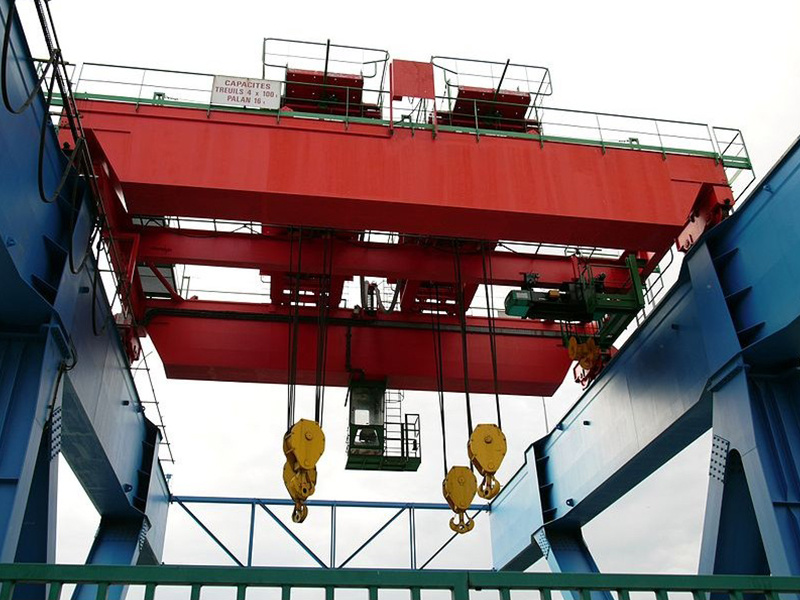
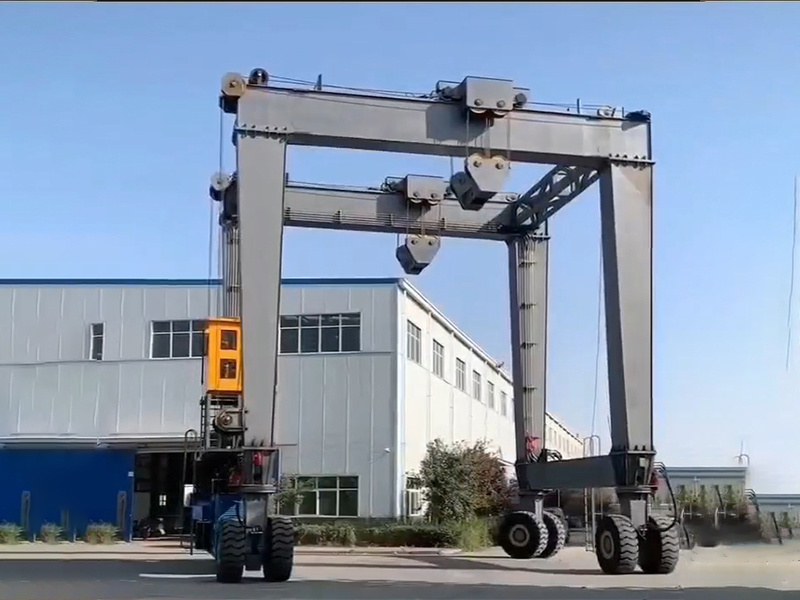
Gear couplings are a core component of crane transmission systems and are widely used to connect the power between motors, reducers, and drums in equipment such as metallurgical cranes and port gantry cranes. They can transmit high torques (e.g., thousands of Newton-meters), ensuring accurate and reliable power transmission under complex crane operating conditions.

Decoding the Structure: The "Mechanical Code" of Millimeter-Level Gearing
The design of the gear coupling represents the pinnacle of materials science and precision manufacturing:
Tooth Material: 42 CrMo alloy steel, carburized and quenched (hardness HRC 58-62). Test data from a metallurgical plant shows that its wear resistance is five times that of ordinary 45# steel, and its lifespan is extended to three times that of traditional couplings.
Drum-shaped tooth structure: The tooth top is arc-shaped (radius of curvature ≥ 50 mm), allowing 0.5 mm axial displacement and 0.1 mm radial offset. In a port gantry crane application, this design relaxes the alignment accuracy requirement between the motor and reducer from 0.05 mm to 0.1 mm, improving installation efficiency by 40%.
Sealing System: Double-lip seals (fluororubber) combined with extreme-pressure lithium-based grease reduce lubricant leakage to less than 0.5% per month in the dusty environment of a mine. This has extended the maintenance cycle of a copper mine's hoist to once a quarter.
From ladles to containers, from underground mining cars to wind turbine towers, gear couplings have always been the "core joint" of industrial power. Every meshing action shortens global cargo transportation cycles; every technological iteration redefines the precision and reliability of "Made in China." As molten steel smoothly tilts and containers precisely land, these "industrial joints" deliver the global power of Chinese equipment with millimeter-level meshing precision.
Keyword:
Next Page:
Feedback
Leave a message online and get the product quotation free of charge. We will arrange the specialist to contact you as soon as possible.



It founded in the 2000s, It has a history of about 20 years. We own a professional produce team,sales team and a after-sale service team, which can make sure satisfy your whole purchase procedure.
Contact Us
Whatsapp:8613507096268
E-mail:sales@aifitemhe.com
Weizhuang, Changyuan,Xinxiang city, Henan province, China